Immersive Exchange Initiative
What unfolds from unconventional collaborations built from what a place already has — the sounds at dawn, the vegetables readily available in town, the mountain range outside the window, a nine-year-old's spruce tip business?
Gustavus, Alaska has a population of 443, accessible only by bush plane or ferry. A remote community where employment is seasonal, goods arrive by ferry, and access to the rest of the world is limited by geography. The biologist archiving whale song for Glacier Bay, the woman who opened the only market in her basement because she didn't like the scarce food options, the family that keeps the inn open for visitors who mostly pass through to see a glacier and leave, the elementary school teacher whose students collect wind speed and tide data at the beach every week. Everyone knows everyone. Things can get rote. Most exchange with the outside world is transactional — tourists come for the glacier and go.
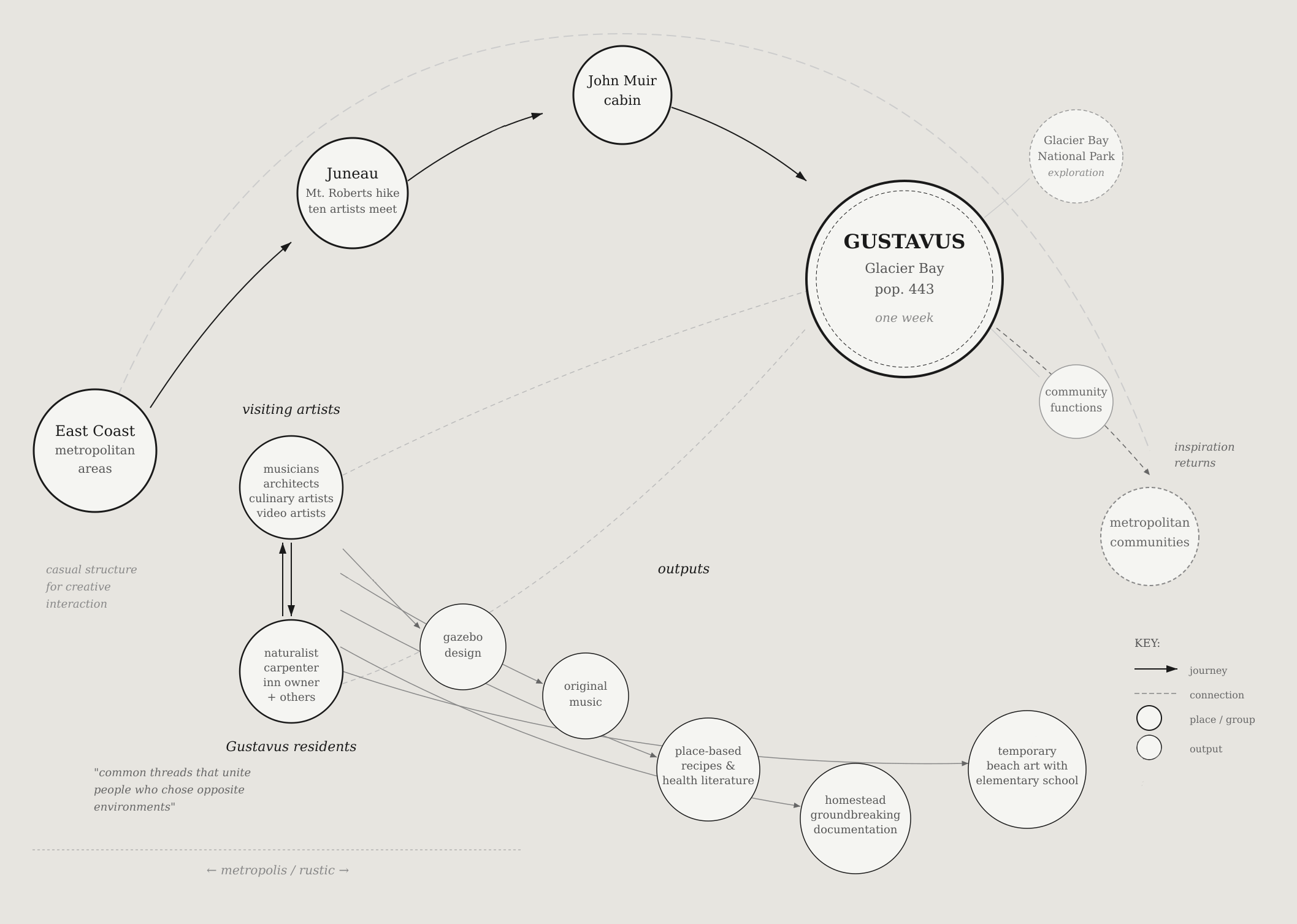
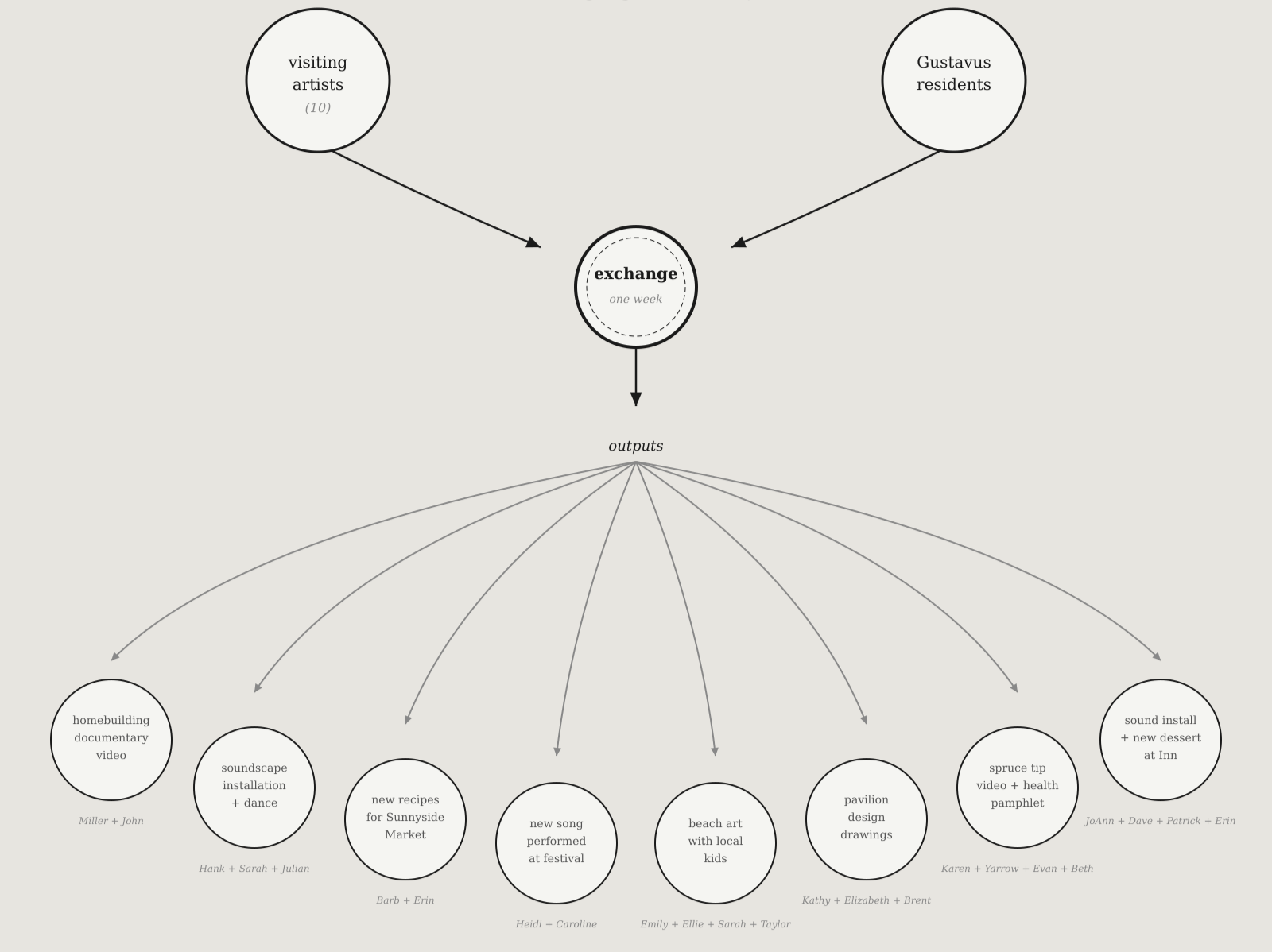
The project started with a question to the community: if a group of artists came to Gustavus, what would you want? Their answers shaped everything. Mutual Phase initiated an exchange: ten visiting artists from east coast cities paired with Gustavus residents for a week of making together. Each pairing built from each other's knowledge.
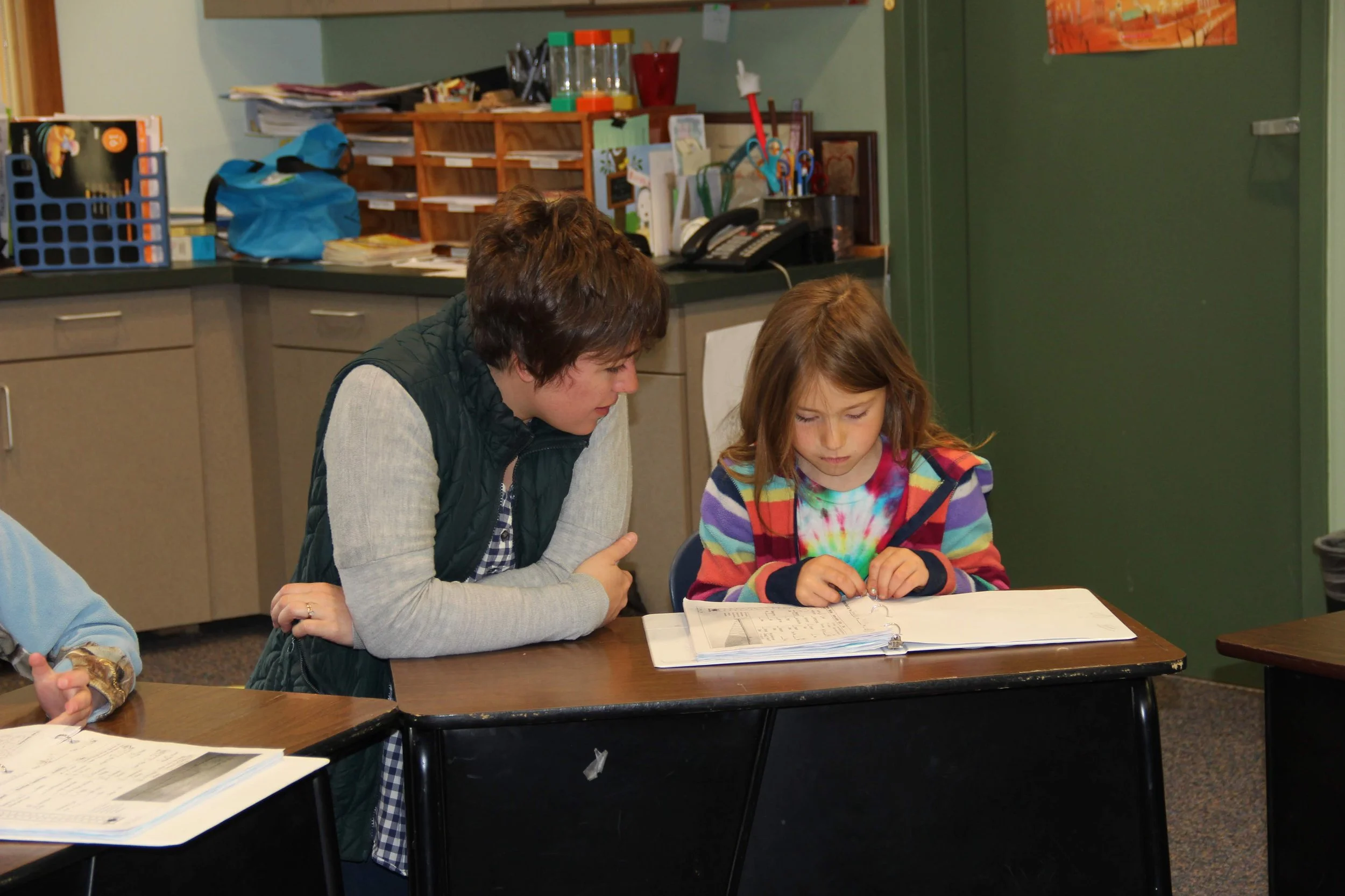
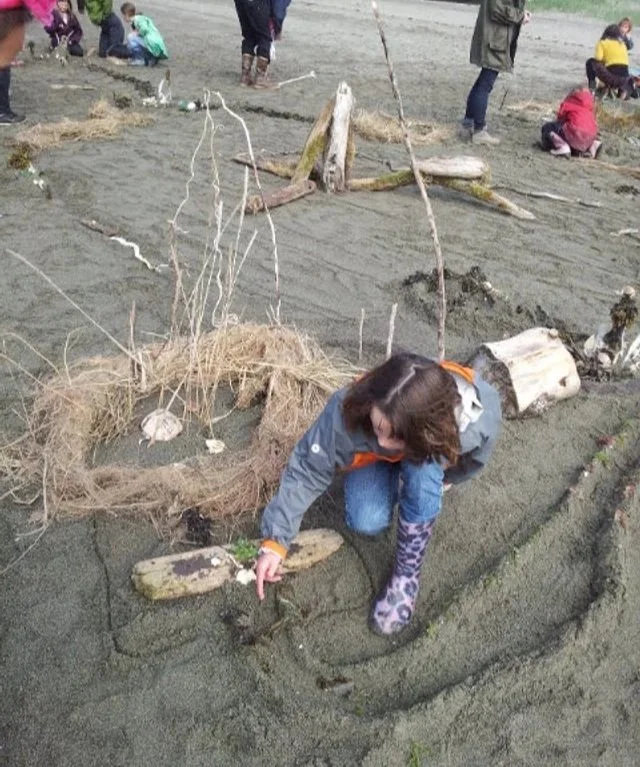
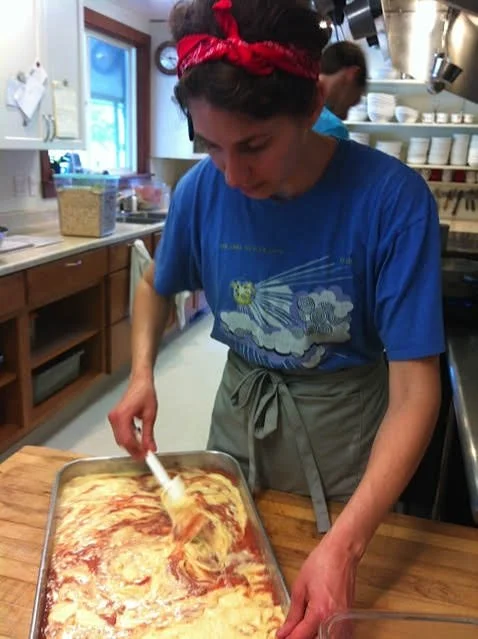
A chef walked into the only market in town and worked with the owner — who knew her inventory, her equipment, her customers — to figure out what was possible with a panini press, crockpots, and whatever produce was on hand. Three new recipes made it onto the menu. A video artist spent time with a carpenter who had been clearing land for three years to break ground on his family home in the Crane Flats. What emerged was a meditative film of the property — the land, the sky, the labor — with a poem over it: "My blood is older than dirt / and I don't even know for sure." The town had no community center — the library was it. The woman who had been working to build one partnered with designers who studied the mountains and drew a pavilion where the Fairweather Range becomes a climbable playscape. Students who collected wind speed and tide data at the beach every week exchanged that knowledge with visiting artists — each bringing something the other didn't have, gathering driftwood and shells together, building temporary structures the water would take back.
A composer joined biologist and recordist Hank Lentfer, who stewards land for The Nature Conservancy and has spent decades archiving Glacier Bay's acoustic life — an environment actively changing as glaciers retreat and species shift. Together they recorded at dawn, capturing glaucous gulls, humpback whales, sea otters, wind, and water. Putting on the headphones, the composer described it as superhuman hearing — every nuance of a bird's wing, every tone of a bug's buzz. Lentfer would stop suddenly and stand still, picking up distant birdsong that no one else could hear yet. A lifetime of rewired listening met a musician's ear for the first time, and from that meeting Mutual Phase composed a piece where bird calls generate melodic phrases, whale sounds become tonal shifts, and wordless vocal harmonies layer with the animals' voices. The original recordings were contributed to the Cornell Lab of Ornithology and National Park Service archives.
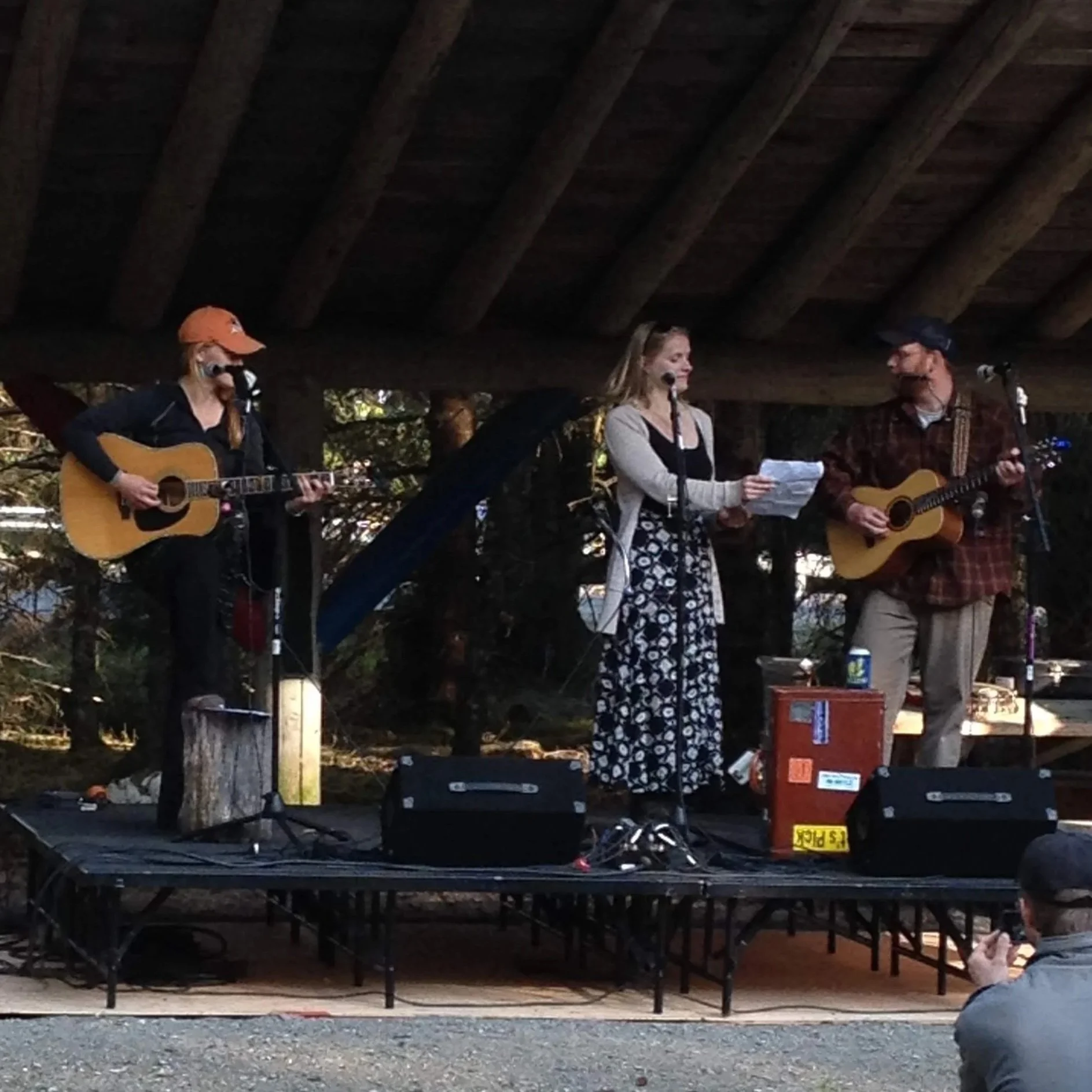
Two singer-songwriters, one from Gustavus and one from Atlanta, wrote a song together in a week: "For the first time in my life I feel the land is part of me." A videographer and public health researcher made a short film and health pamphlet for a nine-year-old already selling spruce tip syrup, salve, and sachets at her own market table — supporting what she and her mother had already built. The family who ran the Gustavus Inn was hosting the entire group — a designer and the chef were in the kitchen, part of the life of the place. Permanent sound equipment was set up to strengthen the inn as a gathering space, and a rhubarb spoon cake made it onto the menu.
Gustavus dancer Sarah Campen developed movement drawn from migration and observation — echoing birds, the sea, the river. The choreography was intercut across Alaskan wilderness, New York City streets, and a performance space where the two geographies merge. That work became "This Place/This Sound," the Mutual Phase single-channel video.
A year later, the town gathered at the Gustavus Public Library to see what the exchanges had produced and Campen perform her dance live. The room held everything the week had generated — video loops, a listening station, photographs, design drawings, food and syrup for sale, kids running between stations. The project had been driven by the community from the start, from the initial question through evaluations and surveys that followed. Some of what the exchanges produced was immediate — a song written in a week, beach art the tide took back that same afternoon. Some of it stayed. Recipes remained on the menu. Soundscapes, film, photographs, and writing from the exchanges remained at the Gustavus Library as a community arts archive. The work lives online — carrying what happened outward beyond a town of 443. And people who would have otherwise never known each other are connected.
Iterations: Gustavus Inn (2014); Dreamers Welcome, Brooklyn (2015); Gustavus Library (2015).